Toss the plans

You will be a starlight when you grow up.

When I'm not a writer-for-hire, I'm a writer-for-fun. I lead writing groups for students ages 9 to 19.


Life takes odd turns. Five years ago when I stumbled into "teaching" (not teaching as much as encouraging), I wasn't crazy about children. Teenagers were daunting. Youngsters were alien, and I had no maternal instinct. Today I am as surprised as anyone to realize I have become attached to these energetic, impressionable, loving children. This is the most fulfilling, and emotionally challenging work, I've ever done.


There are three groups and we meet weekly: Happy Hour (for 9 - 11 years), Writing Club (for 12-13 years) and Writer's Group (for 14-19 years). The programs are part of Seashore Family Literacy (a nonprofit organization) and we meet at the Waldport Community Learning Center.


I am a planner by nature. Organized and structured. I make detailed plans for each week — writing prompts, discussions, books to share, poems to read. But this week I was reminded that the best writing sessions are often the ones in which plans are tossed aside.


The other day, the Happy Hour kids rushed into the Writing Studio in a whirl of giddy excitement. As a reward for good behavior, they had been given fortune cookies. They couldn't wait to share their fortunes with the group.

You will find happiness in unexpected places.


Good luck is just around the bend.

Gathered in a circle, we listened intently and dissected each message: What could it mean? What is happiness? What would luck bring?


We were animated with possibility, and wanted more. So we wrote our own fortunes! Pencils flew across pages. Papers were torn and creased into complicated folds. We traded our palm-sized scribbles with enthusiasm and rushed to share them aloud.


It was 10-year-old K. who saw starlight in my future. I can't wait to grow up.


A meal of books

There are worse things than a book binge.

Chocolate, say, with its after-guilt. Or gambling with its high price.

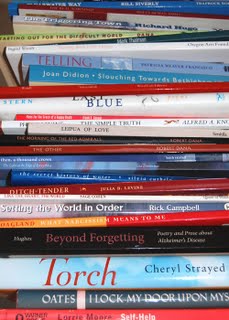
Books are relatively affordable, and it's a good thing because I'm gobbling books to no end.

It started last month with a journey to Powell's Bookstore in Portland. Thanks to a gift card Christmas, I filled two bags in less than an hour.

This week, at Mari's Books in Yachats, I celebrated their newly expanded shop with an armload of purchases.

And then I hit the blogs. One site led to another and . . . Quick as a box of donuts, I gathered poet discoveries —Susan Rich, Alison Stine, Adrian Blevins — and rushed to buy their books. Like a sugar high, I felt giddy with new material. Each phrase engaged, every tangle of words offered layers of meaning and meat. New worlds! New words! I examined, analyzed and gorged.

I align myself with Jeff Gordinier, who confesses to being a poetry shopaholic, declaring that in a world of mass market, big-name publishing, "buying a book of poetry constitutes a gesture of resistance."

"It's a tiny push in the opposite direction," he says, "a pipsqueak of peaceful defiance."

I have no guilt in my reading investments; I'm supporting the underdogs of publishing, writers who toil away with no substantial reward beyond the act of expression.

Still, I'm a realist. Next week, I'll give my wallet a break and hit the library. When I do return to buying, rather than collect books on a shelf I will read and regift, passing along my latest finds to family and friends. Or donate the books to the local library. Good books, like good meals, are best when shared.


How to write a good poem

"I think the most important thing any poet or writer can do to improve his or her odds of writing a good poem of any type is to learn continuously how to pay attention.
Poetry is not about how we feel, of course. It's about how we feel about how we feel. Knowing how we feel about how we feel requires an almost ungodly attentiveness or consciousness— an otherworldly watchfulness and vigilance."

Adrian Blevins
from
How to Write Love Poems


Writing Wanted for the Switcheroo

I love artful collaboration. Broadsided — one of my favorite get-poetry-to-the-people efforts — does, too.

Founded in 2005, Broadsided is "putting literature and art on the streets" by publishing an original literary/artistic collaboration on their website each month. Visitors can download, mull, print and share.

This month Broadsided is asking writers to take part in the Switcheroo.

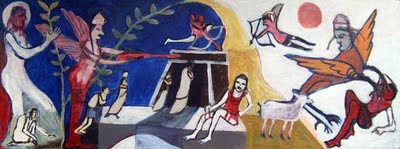
Here's how: Respond to the image above in poetry, fiction, or prose. Responses need not be literal. However, the art and writing must, together, work to create a greater piece. In essence: something strong, unique, interesting, and that intersects with the art in a way that is at once surprising and fitting. Submissions are due by March 5.

More details here.


Powerless and poor

I'm not sure which is worse: That a political leader compared the poor to stray dogs, or that so few of us roared back at the cruel comparison.

As so often happens, while many of us reeled in disbelief, a writer formed the words we could not. In his column today, Pulitzer Prize winning writer Leonard Pitts Jr. stood against injustice:
"If he'd said it of Jews, he would still be apologizing.
If he'd said it of blacks, he'd be on BET, begging absolution.
If he'd said it of women, the National Organization for Women
would have his carcass turning slowly on a spit over an open flame.
But he said it of the poor, so he got away with it. . . . read more


Something to celebrate

I am dizzy with gratitude after last night's packed-house poetry reading.

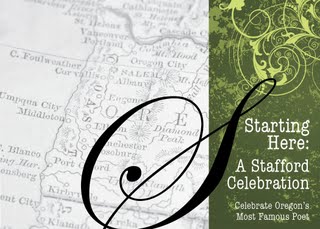
Over 60 people turned out to celebrate the life and work of William Stafford, Oregon's most famous poet. To honor the prolific writer, Stafford events and readings take place every January all over the world. Last night's event marked the first Stafford celebration in Yachats, Oregon (a coastal town of just 700 residents).

Special thanks to:
• Writers far and near, young and old, for sharing words & good spirits.
• An encouraging audience, filling the evening with laughter, energy and enthusiasm.
Green Salmon Coffeehouse for supporting the arts and letting us rent (and rearrange) their space.
Richard Sharpless for setting a coffeehouse-music vibe, and creating a Stafford-inspired song just for the event.

Thank you!

Next Up: The fourth annual Off the Page reading in April! This event, featuring Oregon writers, gets bigger and better each year. Stay tuned for details (and pop me an email if you'd like to get on the mailing list).

Writer Revealed: Rhett Iseman Trull


I want to go back to the winter I was born and warn you

that I will flood through your life like acid

and you will burn yourselves on me


— from The Real Warnings Are Always Too Late


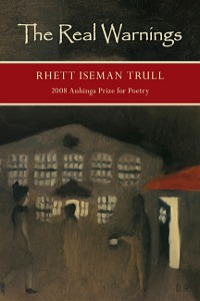
For the third edition of Writer Revealed — a series featuring interviews with writers who intrigue and inspire — I'm happy to share with you my latest, favorite book of poems and the poet who wrote this stunning collection. (Win this book! See details below.)

Rhett Iseman Trull's first book of poetry, The Real Warnings was published last fall and won the 2008 Anhinga Prize for Poetry. Her poems have appeared in numerous publications, including American Poetry Review, Best New Poets 2008, and Prairie Schooner. She received her M.F.A. from the University of North Carolina at Greensboro where she was a Randall Jarrell Fellow. She and her husband publish the literary journal Cave Wall in Greensboro, North Carolina.

Q. In choosing your book for the 2008 Anhinga Prize for Poetry, Sheryl St. Germain says “Open this book up anywhere and you'll find a poem of fierce and uncompromising energy and insight . . . I've never read a poet who understands more fully the brutal paradoxes of love and of loving damaged things.” What influences or inspirations led you to poetry, and to these ‘fierce’ poems?

My biggest influence always has been reading. In fact, before I could read, I used to listen to my storybook record of Disney’s The Fox and the Hound over and over. I can quote it still: near the end, there’s this moment that goes, “Sometimes, on warm summer nights, Tod and Vixey would leave the forest and climb the hill overlooking Copper’s house. As Tod looked fondly down at his friend, the voices of a little fox and a little hound seemed to echo in the breeze…”

That sentence did something to me as a child. I could feel the words go straight to my heart and move me in some mysterious and vital way. And I think all of my writing, ever since, has been an attempt to recapture the kind of feeling that ran through me when I first heard those words.

I started by writing short stories and novels. But when I was twelve, I discovered poetry. I was in a summer musical, Annie. I got to be an orphan because I was little and cute, not because I could sing. I wanted to sing, though. I yearned for that world of musicals. More than anything, I wanted to be a Broadway star, but I knew I didn’t have the talent for that path. Singing in musicals lit that same fire the The Fox and the Hound ending did. I think what led me to poetry was that need to sing.

An older girl in the musical that summer showed me her notebook of poems, which she used as a kind of journaling device, pouring her deepest wishes and pains into these poems. I had never thought of poetry that way, as a kind of whole-body song on paper. I was hooked. I went home and started my own poetry notebook.

I like that word Sheryl St. Germain used: “fierce.” I’m honored by that word. Emotions that are fierce are hard to capture in language, and yet that’s why I write poems: that driving need to try to turn whatever I feel with ferocity into some kind of music.

What is your favorite poem in this collection? Why?

That’s a tough one because each poem is special to me for different reasons, and my favorite of the moment changes often. Right now, Heart by Heart the House is my favorite, I think. I wrote it as a challenge and promise to myself to try to live more in the moment. I tend to be a catastrophic thinker, always worried about what awful thing is going to happen next. Most of us live that way, with our minds more in the future or past than the present. I’m learning to love the moment and enjoy the moment more. Heart by Heart the House is a kind of love poem to my husband, Jeff, and to our life, to my life in the moment.

How do you support your poetry habit? Do you have a ‘day job’?

Right now, my “day job” is the non-paying day-and-night job of publishing a poetry journal, Cave Wall. But over the past six years, while trying to complete and polish the poems in The Real Warnings, I’ve had several jobs, from teaching undergraduates at University of North Carolina at Greensboro, to working in my local comic book shop, Acme Comics. I miss teaching and hope to return to it soon.

You are the editor of Cave Wall, a literary journal. How do you balance your work promoting and publishing other writers with your need to do your own writing and promote yourself?

I love working on Cave Wall. I love every aspect of it: discovering poems and art that move me, figuring out the best layout, mailing a finished issue into the world, calling bookstores, opening the mailbox to find a huge stack of submissions. I spend more time on Cave Wall than on anything else in my life. And although it has taken away from my own writing time, I think it’s helped me grow as writer. It’s led me to appreciate more the moments I do have to work on my own writing so that I use that time more wisely.

Before I started Cave Wall, I was putting a lot of pressure on myself, feeling extra critical of every word I wrote. I still get that way sometimes, but Cave Wall has connected me with so many poetry-lovers and poets—not just those we end up publishing but all those who submit their work and all our readers—that gratitude has swept over me and outshined the self-anger and frustration. My writing now comes from a better place inside me. And just realizing how huge and varied the world of poetry is has inspired me. So I think the loss of some writing time is a small price to pay for that feeling of gratitude, inspiration, and awe that Cave Wall has awakened in me.

Balance is difficult both to achieve and to maintain. As soon as one finds it, watch out: something else is just around the corner, coming at you, and you will have to learn to balance all over again. But my advice to all writers out there who are trying to juggle many things (jobs, family, kids, etc.) is to try to catch the frustration as it rises and turn it into gratitude. It’s easier and more fulfilling to write from a place of gratitude.

What poets would you like to emulate? What fiction has your interest?

I have way too many favorite writers to name here, but I will list some. I read a thousand times more than I write, in all styles and all genres. In fact, if I say I’m going to sit down and write this afternoon, that means I’m going to sit down with a stack of books and read and hope something moves me to write. Some of the poets whose work I return to often are Elizabeth Bishop, Mark Doty, Christine Garren, Jack Gilbert (especially The Great Fires), Jeffrey Harrison, Edward Hirsch (especially Wild Gratitude), Richard Hugo, A. Van Jordan, William Matthews, Theodore Roethke, William Butler Yeats, Robert Wrigley (especially Lives of the Animals), Adam Zagajewski.

Lately, I’ve been learning a lot from the poetry of Robert Dana, Sarah Lindsay, Erika Meitner, Jud Mitcham, Liz Robbins, Alison Stine, Natasha Trethewey, Cecilia Woloch…you can’t go wrong with any of those. My favorite novels include Corelli’s Mandolin by Louis de Bernieres, A Prayer for Owen Meany by John Irving, Bel Canto by Ann Patchett, Housekeeping by Marilyn Robinson, East of Eden by John Steinbeck, Mrs. Dalloway by Virginia Woolf.

I love short stories, as well, and have been spending a lot of time lately with beautiful stories by Holly Goddard Jones and Kevin Wilson. Also, one of the best short stories I’ve read recently was published earlier this year in the journal One Story. It’s called Hurt People by Cote Smith. I think it was his first published story, and I can’t wait for more by him.

I read many comic books, as well. My favorite recent titles are Alias by Brian Michael Bendis, Cassanova by Matt Fraction, Y the Last Man by Brian K. Vaughn, and Fables by Bill Willingham.

I’m a collector of words and often have my students collect words, too. Do you have any favorite words?

The words that come to mind are the names of my cats: Charm, Chulita, and Pita; and Chulita’s nickname, Boombadoom. That’s weird. Maybe it’s because I say those words more often than other words throughout the day and associate them with happiness. Theodore Roethke wrote that poetry is giving a cat its right name, or something like that. So yeah, I’m gonna go with: Chulita, Pita, Charm.

You’ve done many interviews and readings since your book was published. What question hasn’t been asked that you’d like to answer?

I haven’t been asked about the importance of revision. For me, the majority of the writing process, and the place where the magic happens, is revision. It’s not unusual for me to work on a poem for years before it’s ready for an audience.

There’s a sequence of poems in my book called Rescuing Princess Zelda. It’s made up of nine poems that take place in the adolescent wing of a state mental institution. From start to finish, I worked on that series for ten years. When I wrote the first poems for it, I didn’t know it was a series, so I guess I should clarify that I worked on the poems in it for ten years and worked on it as a series for about six years. I’m not quick to let go of a poem. I like to slow down, let a poem sit in a drawer for awhile, and return to it many times over many months to see what emerges.

Every now and then a poem will spill out almost whole, almost polished, in a first draft. This happens for me with maybe one out of every 25 poems I write. And that’s a great feeling, a boost in confidence and energy.

But I think, maybe, the more rewarding feeling for me is when a poem I’ve worked on for months, even years, comes together and all that time spent pouring over dictionaries and research, all that time switching around the syntax, pays off. The majority of my poems need that kind of time to find their right shape and language. I am a big believer in the transformative gifs that come from time and distance.


WIN a copy of The Real Warnings
I
t's easy. To enter, simply write a comment below, or send an email to dcm@drewmyron.com. Provide your name and contact information. A winner will be selected at random from the entries. But hurry! All entries must be received by January 30, 2010.





And the winner is . . .

In the drawing for a consultation with book marketing coach Liz Nakazawa, the lucky winner is Jennifer Jeanelle. Congratulations!


Have a suggestion for our next Fast Chat Friday? These informal, end-of-week interviews feature writers, publishers, editors and other creatives. Feel free to send me your suggestions.

Forbidden Words


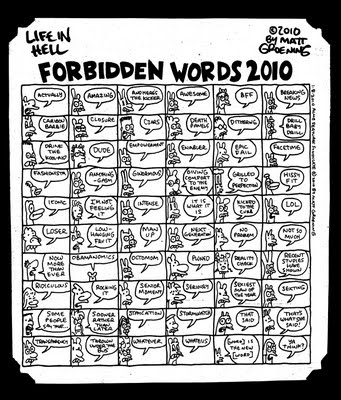
In this brand-new-shiny year, can we never again utter whatever and no problem?

Portland-born artist Matt Groening, creator of the Simpsons and the Life in Hell comic strip, has captured all the tired words and phrases I'm too annoyed to name (this appeared in last week's Oregonian. Click to enlarge). Let these never pass our lips again . . . But wait! Where's game changer, bromance and git er done?

What's on your list?


Fast Chat Friday: Liz Nakazawa

I'm happy to kick off the first edition of Fast Chat Friday, a series of informal end-of-week interviews with writers, publishers, editors and other creatives. This week, you can win a free consultation with book marketing coach Liz Nakazawa. Simply enjoy the chat, then add your name and a comment to be entered in the drawing.


Portland writer and editor Liz Nakazawa is the owner/founder of Market My Books, a firm offering book marketing strategies and coaching. A freelance writer since 1984, Liz has published numerous articles on a variety of subjects. Her work has appeared in Oregon Business Magazine, Christian Science Monitor, Psychology Today, Fitness Magazine, and Northwest Travel. In addition, for ten years she was freelance writing instructor at Portland Sate University.

Liz’s book publishing and promoting career began by publishing of her own work, Deer Drink the Moon: Poems of Oregon, which was named one of the 150 books for the Oregon Sesquicentennial.

Let’s talk first about book marketing. What can you offer authors that they can’t do themselves?

I help authors think outside the "bookstore box" and help them discover different approaches to marketing. For instance, one of my clients wrote a book about the importance of fathers in our lives and he markets mainly to Rotary Clubs all over Oregon. That is his target market as those clubs are very family oriented.

What’s the best thing authors can do to get readers to their book?

The best approach for authors is to do one thing every day to market their book, their gift to the world. There isn't one best approach. Marketing needs to be done on many levels. It is great to market to bookstores but there are 144,000 libraries in the U.S. and that is a huge market. In my classes I discuss the best way to approach libraries. In addition to public libraries there are also academic libraries, prison libraries and many other kinds of libraries.

I like your idea of a strategic plan. In terms of marketing, is there a common miss or mistake you see authors make? Conversely, is there a brilliant move you'd like to see more?

There are two marketing mistakes authors make. One is thinking that you have to spend a lot of money marketing. Many authors spend hundreds of dollars sending slick, multi-page marketing materials to libraries and bookstores by snail mail, a costly decision. A one-page book sheet done as a PDF suffices. This can be then be sent to any prospective buyer. The other mistake is underestimating how interested libraries and bookstores will be in your book. Many libraries, for instance, love local authors and are eager to purchase your book. Do not give it away for free!

As a book editor, you created Deer Drink the Moon, a wonderful collection of work by 33 Oregon poets that “celebrates the state (and state of mind) of Oregon.” How did you come to this project, and to poetry?

I attended a poetry reading honoring our state's late poet laureate, William Stafford. Someone read a very wet-sounding poem, an ocean poem, and then someone read a very dry sounding poem, one set in eastern Oregon. At that moment I thought, "Why not gather poems that reflect the geography, flora and fauna of our diverse state" These poets in the book are finest in the state.

What’s your next project?

My next project is to write a one-act play about a family dealing with Alzheimer's. I know, that is a very different sort of project!


Win a free consultation with book marketing coach Liz Nakazawa. To enter the drawing, simply add your name and a comment below. Or, send a quick email to dcm@drewmyron.com. The winner will be randomly selected and announced next week— on Friday, January 15.

Forecast: Paintings & Poems


Forecast has come home!


Thanks to you, the word-art collaboration created by Tracy Weil & Drew Myron has had a great run:


• The exhibition traveled from Denver's Weilworks Gallery to Boulder's National Center for Atmospheric Research.


• Poems were read at mountain-top weddings and performed in seaside coffeehouses.


• The Special Edition Exhibition Book is featured in libraries and student classrooms nationwide.


Since its debut in Autumn 2008, you've oohed and ahhhed and asked to purchase and now we are happy to announce:


The Forecast paintings/poems are for sale!

Details here: http://weilworks.com/forecast/works.html


Many thanks for your support and appreciation. Tracy and I thrive on on creative collaboration, and your encouragement and enthusiasm fuels our art. Thank you!

Gratitude looks best in cursive

I love January, so full of fresh starts and determination. And I get giddy with the thank you notes this season requires. I love the excuse to write messages — and even full letters! — in a long, careful hand that demands pause and consideration. Because I was three steps behind this entire holiday, I'm using thank you notes as a replacement for the Christmas cards I intended to, but never did, send. Now I get to take my time and pick a card to match each recipient. Funky? Formal? Lined and structured, or scrappy and handmade?


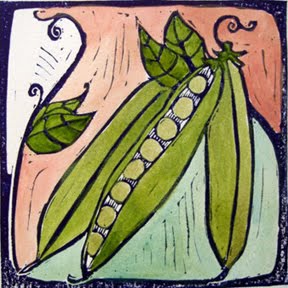
My latest favorite card artist is Kristin Loganbill at Moontea Artwork. From her farm-studio near the Oregon Coast, she creates handsome and homey blockprints. Her art prints now adorn our walls, and her notecards are the ideal instrument to deliver gratitude and glee.


At this end

Burning the Old Year

Letters swallow themselves in seconds.
Notes friends tied to the doorknob,
transparent scarlet paper,
sizzle like moth wings,
marry the air.

So much of any year is flammable,
lists of vegetables, partial poems.
Orange swirling flame of days,
so little is a stone.

Where there was something and suddenly isn’t,
an absence shouts, celebrates, leaves a space.
I begin again with the smallest numbers.

Quick dance, shuffle of losses and leaves,
only the things I didn’t do
crackle after the blazing dies.

From Words Under The Words: Selected Poems

Sent with love

to december

this is a letter
to december
its chills and surprises
its hurry
its wait

to the longest month
the shortest days
to mittens and chocolate
cookies and nog

to long lines and tired feet
pine, fir
elves, angels
and fa la la la la

this is a story
a memory
a manger
a message
a blessing
a wish

wrapped in hope
tied with peace
sent with love


- drew myron
with thanks and a nod to This is a Letter by Rebecca Dunham

Wordful creation

The best thing about Christmas may be the mindfulness it brings.

Last week the Young Writers, a group of high school-age writers and adult mentors, exchanged gifts. The rules were simple: We each drew a name, and had one week to create a word gift for that person. We could create original poems, songs, letters . . . or share published pieces, or any other wordful creation that reminded us of the name we had drawn.

When we gathered to share our gifts, gratitude and pride circled the room. One student received a love poem, another a letter. One teen was given an inspirational message printed on fancy paper and presented as a scroll. Another a handmade card. A young woman gave me an artful acrostic of my name.

It is a powerful experience to receive a gift that someone had made purposefully for you. Both the giving and receiving require thoughtful consideration and contemplation. And that, really, is the best gift of all.

For the exchange, I drew the director of Seashore Family Literacy, who started the Young Writers Group many years ago. Here's the poem I gave to her:

Lost and Found
for Senitila, who knows

This morning
the young girl
wears a face
wounded by

words

with my arms
around her
I am wounded too
Tonight you call

say

I am lost
I want to tell you
I am lost too
all of us stumbling

hurt and bruised

I want to say
pack for a long trip
plot your way
but instead

we share

a map
worn from
distance and
drift

together

we study the
roads to find
our way
home


— Drew Myron