

For what is sorrow but the underside of beauty, the long-suffering cousin of joy?
Sonja Livingston
Queen of the Fall

For what is sorrow but the underside of beauty, the long-suffering cousin of joy?
Sonja Livingston
Queen of the Fall
 Blank page. Clean windows. New shoes. I like a fresh start.
But, sheesh, I can't take the pressure of a new year.
I can't see another photo of a fit woman with luminous skin and super-toned bod. No more lists advising me how to be a better boss, rising star, team player. And please, no more images of dreamy couples on dreamy beach vacations.
Aspiration wears me down.
I already know I'm not going to write every day, exercise more, or eat less. I won't give up sugar or dairy or carbs. I might drink less. I'll try to love more. But, really, I can't guarantee much.
I've read the same endless stream of self-improvement suggestions you have: Have a clear goal. Write affirmations. Positive self-talk. Visualize your ideal self. Self care.
I get it, but oh, it takes so much effort to be my "best self." While I don't want to let myself go, I'd sure like to relax.
So, this year I turn again to Lisa Romeo's I Did It practice. Rather than look forward with resolution and proclamation, I'll quietly look back and assess what I did achieve: personally, professionally, emotionally, physically. I'll recall (to myself) the accomplishments and may even feel buoyed. And that may be just the nudge I need to believe I'm able, willing, and often revved with possibility.
How about you? In this new year, where's your head and heart?
 It's a big Thankful Thursday — the last of the year. Thank you for spending Thankful Thursdays with me, for keeping me accountable, appreciative, and grateful for things big and small.
Attention attracts gratitude, and gratitude expands joy, and my gratitude grows when shared with you.
Thank you.
Bell Song of Thanks
for patience and prayers
for holding tight
and letting go
for mothers
who cry in the dark
and pray for light
for fathers
reticent as rocks
solid as time
for brothers
that call
for sisters
that don’t
for the near miss
the second place
the small dent
for speaking up
and stilling down
for lungs to run
legs to stand
a heart to believe
for sickness
and balm
fortitude and grit
for newborns
cradled in hopeful hands
for goodbyes
that shook
left us sobbing and stranded
for faith
and song
and the reminding chime
for giving up
and starting over
despite of,
because of,
almost always
for
love.
- Drew Myron


Memoir often gets a bum
wrap as a self-involved
genre, but the irony is that
when it's done well, a memoir
is an exploration of one person's
life that illuminates the lives
of many."
— Sonja Livingston
Sonja Livingston is master of detail. She peers beneath the surface and extracts the emotional terrain of people and place. She is author of Ghostbread, an award-winning memoir about growing up in poverty (it's one of my favorite books), and her newest work, Ladies Night at the Dreamland, is a collection of essays.
At 3 Good Books — a blog series I host — Livingston shares her favorite books on the theme of Hidden Lives.
Join us, here.
Had enough of the jingle-jangle of Christmas?
Me too. I cozy to a quiet Christmas, with books, blankets, and calm.
For sanity and serenity, I'm listening to tranquil tunes:

Aimee Mann: One More Drifter in the Snow
Ever since she penned and performed the soundtrack to my favorite movie, Magnolia, Aimee Mann has reigned as my very own queen of substance & cool. With this collection, she turns classic tunes into a hushed and intimate holiday with a dreamy vibe.

Chris Botti: December
Okay, okay, the title says seasonal, but here's my confession: I play these tunes all year through. Botti's low-key trumpet is warm and soothing, and keeps me snuggled and serene.

Sarah MacLachlan: Wintersong
Gauzy and ethereal, Sarah McLachlan delivers. This collection is signature Sarah: pretty, pensive and beautifully moody.

Tracy Chapman: O Holy Night
While she doesn't have her own collection of holiday tunes, Tracy Chapman's O Holy Night is the standout of A Very Special Christmas 3 compilation.
As usual at this time of year, I'm in a mix of harried, moody and melancholy, and almost any version of Silent Night leaves me in near-tears. But, really, isn't that the spirit of the season — to be touched, to be moved?
Your turn: What's playing, and are you moved?
These music selections are available on iTunes and Amazon.
 Let Me, a found poem by J.I Kleinberg
"Every journey is about finding," says Judy Kleinberg, an artist-writer who has created over 1,000 found poems.
"Browsing through magazines for images, I noticed 'accidental' phrases that were created through the happenstance of page layout," she says. "My process is all about finding that unintentional syntax and combining small word chunks into poems."
Join us at 3 Good Books, where Kleinberg offers reading suggestions on the theme of finding.
In the Pacific Northwest, where I live, all about me is floods, landslides, and endless wet. For days that wear like weeks, we've been saturated in rain and gray. And gray is more than weather.
Against Gray
Mold. Mice. A tough porkchop.
The angry ocean.
Old carpet.
Seagulls, pigeons, worms.
Trash can. Concrete.
Seattle. Portland. Dusk.
The pull of sadness.
Worn cedar siding. Wind.
Mullett, tuna, catfish, dead fish.
The words maybe almost.
Black and white photos dimmed with time.
Late night television of my youth.
Oatmeal. Gravel. Cigarette smoke. Dust.
Old man eyebrows, wiry and wandering.
Women who’ve given up.
Oyster shells. Fog.
The flu. A murky x-ray.
Loneliness is a shadow.
Mornings without my glasses.
Bullets, battleships, steel.
Mushrooms. Sweat stains. Dirty socks.
Barbells. Knife. Wrench.
Clenched jaw.
Dirty dishwater. Sideways rain.
In the distance, you.
- Drew Myron
In a gift giving frenzy?
As I do every year, and much to the chagrin of my nieces and nephews who would prefer a fat wad of cash, I'm giving books.
Books always fit, and rarely offend. Books are best to both give and receive (though cashmere and sea salt caramels are strong contenders, but enough about my wants).
Feel free to borrow my gift list and make it your own*:
MEMOIR (without the annoying me-me-me)

Bettyville
by George Hodgman
A gay man returns home to take care of his strong-willed, elderly mother, and the results are both very funny and very touching. The New York Times says "it works on several levels, as a meditation on belonging, as a story of growing up gay and the psychic cost of silence, as metaphor for recovery."
MOTIVATIONAL (without cloying platitudes)

The Best Advice in Six Words
edited by Larry Smith
We've come a long way since the first book of Six Word Memoirs. Book after book, the best-selling series works so well because creating six word snippets is both challenging and fun, and can deliver a delightful mix of messages amusing, sharp, touching and sad. (Have you written your six-word memoir? You can see mine across this website header: Push words. Pull light. Carry balm.)
SPIRITUAL (without dogma)

Pastrix: The Cranky, Beautiful Faith of a Sinner & Saint
by Nadia Bolz-Weber
A tatooed, female, recovered alcoholic joins with homeless, gay, and transgendered friends to start a church. This is not fiction, this is faith. The kind of religion that is inclusive and real. Now a New York Times bestseller, Pastrix is described as "a book for every thinking misfit suspicious of institutionalized religion, but who is still seeking transcendence and mystery."
YOUNG ADULT (without vampires or zombies)

The Way Back from Broken
by Amber Keyser
At last, a novel that understands teen readers are hungry for complex characters and deep material. In this compelling and poignant novel, a 15-year-old boy grapples with the grief of losing his baby sister. The author "takes the reader inside the pain of loss," notes a book reviewer, "making it personal and ragged in all the best ways, so that each step toward healing builds to a life-affirming and cathartic conclusion."
ILLUSTRATED BOOK (sorta story, sorta comic)

Hyperbole and a Half: Unfortunate Situations, Flawed Coping Mechanisms, Mayhem, and Other Things That Happened
by Allie Brosh
It's been out two years but I'm just now getting to the lovefest for this sharp and amusing illustrated book. "Funny and smart as hell," says Bill Gates (yes, that Bill Gates). NPR, Goodreads, Library Journal, Elizabeth Gilbert and 3,000 Amazon reviewers love this book. And now, you can add my (not at all powerful) name to the list.
FICTION (literary, but not overly crafted)

Elegies for the Brokenhearted
by Christie Hodgen
I like my fiction deep and dark, and Elegies for the Brokenhearted delivers. Melancholic and deftly written, the novel tells the story of one woman's damaged and difficult life through a series as elegies — aching and insightful laments for the dead. Original and absorbing, this is the best book I read in 2015 (though as usual I'm late to the launch; the book was published in 2010).
* I have numerous caveats for my reading pursuits. But don't fret, it's the thought that counts. Unless you give me a cookbook, to which my response will always be, "Can't we go out for dinner?"
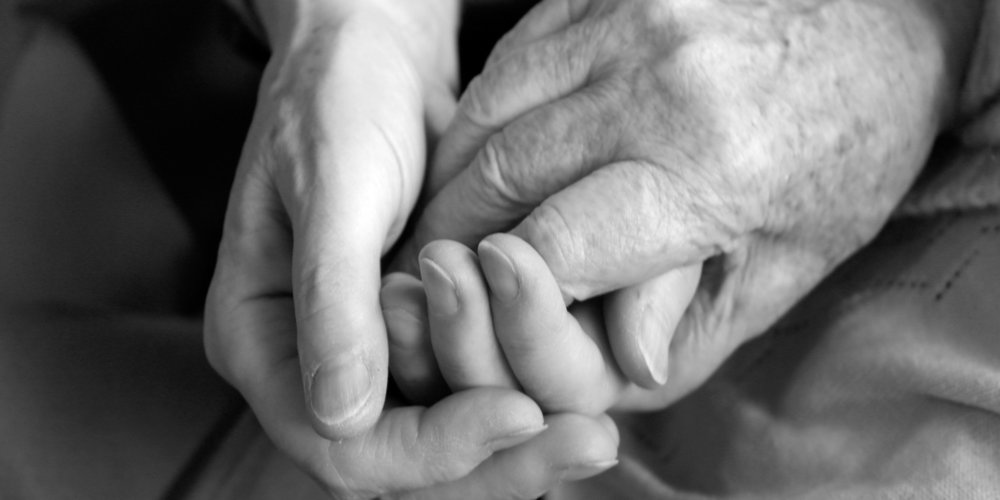
One of my best days lately was talking with a woman who cannot speak, listening to a woman who cannot hear, and dinner with a friend who said, “I only cry in front of you.”
___
For most of the past year, I’ve willingly moved toward sickness and death. Life recedes at every turn, among family, friends, and at work. There’s no shortage of pain, this we know.
___
When we visit a friend in the nursing home, my kind and compassionate husband can’t wait to leave.
Is it the smell, I ask? (They all smell, even the good ones. Because, well, incontinence stinks).
Is it the sight? Elderly people aren’t pretty. The beautifully elegant and aging Katherine Hepburn is like a unicorn, a myth. The rest of us sag, spot, wrinkle, shrivel, and smell.
No, he says, I just don’t know what to say or do.
Without action, he’s restless, wants to fix. I know the feeling, though I’m spared this anxiety because I rarely feel equipped to fix anything.
Still, what seems the most obvious action is also the most difficult: show up, without resolution, avoidance, distraction, or cheer.
___
use·ful
ˈyo͞osfəl/
adjective
1 : capable of being put to use; especially : serviceable for an end or purpose <useful tools>
2 : of a valuable or productive kind <do something useful with your life>
My every prayer: make me useful.
___
Years ago, I began working with teens in a writing group. Many of the young writers struggled through lives complicated by abuse, neglect, drugs, alcohol, and more. I had no experience in social work or teaching. Even writing was more instinct than education.
Expressing my anxiousness, a good friend offered the best advice: Just show up. Be present.
She was right. The teens have now grown up and on, and I still whisper those five words to myself.
I’m not an expert in health care, psychology, or, really, anything. At the nursing home where I work, I sometimes turn into a strange version of myself. My voice rises in a cheery rush, an effort to fill the uncomfortable space. But I’m trying. Some days I visit with a woman who talks in gibberish. We don’t need words. We sit in the sun. I hold her hand, and she smiles.
I’m trying to be quiet, to sit still, to be.
___
What I’m learning is the span between sickness and death is a long, gray, murky mess. The definitive moments are few. You do this and this and that, in a zigzag, with no direct route. Sickness is cloudy and slow.
Few of us die suddenly, peacefully, easily. It’s not death that unsettles me, but the rocky road to get there.
___
We should write about this, my friend says.
She's in the mire of caregiving, watchful of every change in a disease robbing body and mind. This is not the life she imagined. Together, each in our own way, we’re seeing many ends.
But what would we say? Illness is ugly. Aging stinks. We don’t want to see the unpleasant end. And when we squirm with discomfort, we don’t want to realize that we’re not as magnanimous as we believed.
___
You can brighten a life, I tell a prospective volunteer. But not many people want to visit the darkness of dying, even if a visit would light up the lonely.
It takes so little to help another. This is a fact both comforting and sad.
___
At the nursing home, or in the hospital, time slows and I’m in a protected envelope in which every moment matters. Most days I feel lucky to be among people who trust me enough to let me see their fear and loneliness. I’m trying to say that every small gesture is worthy of effort. And those gestures are largely unseen, and that seems the most honest and true thing I can do.
___
But let’s not get dramatic; I’m holding a hand, not curing cancer. I’m admiring a necklace, and noticing new socks. I’m discussing the chicken dinner, and gushing over a fresh manicure. I’m pushing a wheelchair, not because she can’t push herself but because it gives me an excuse to chat and smile, to be of use.
___
I didn't expect to laugh so much. But I'm giggling with Betsy, who is telling me about her absent children and no-good man. And I'm laughing with Sylvia, who is sneaking a smoke. And I'm silly with Ellen as we bumble to secure her jacket that is all zippers and sleeves.
"I'm no good at this," I mutter.
"You're learning," she says, patient as Sunday.
We laugh at our mutual inability. We are giddy about nothing at all, and in nothingness we share an everyday ease.
___
Happiness doesn’t come in the way I expected, writes Samantha Harvey, not a massing of good things over time, but a succession of small, strange and unowned moments.
___
Unexpectedly, gratitude gathers. My thankfulness is a messy pile of autumn leaves. In this decay, there is much beauty.
These are difficult days for gratitude. The days are short, the skies gray, the heart heavy.
And yet, of course, we must make room in the mire for thankfulness, to keep some safe and tidy spot for our gratitude to grow.
Praise our crazy fallen world, writes Barbara Crooker, it's all we have, and it's never enough.
I often reach for Crooker's reassurance, and learned recently that her gratitude is hard-earned, which makes her beautiful poems even more illuminating. You can learn more about Barbara Crooker on the 3 Good Books blog.
Praise Song
Praise the light of late November,
the thin sunlight that goes deep in the bones.
Praise the crows chattering in the oak trees;
though they are clothed in night, they do not
despair. Praise what little there's left:
the small boats of milkweed pods, husks, hulls,
shells, the architecture of trees. Praise the meadow
of dried weeds: yarrow, goldenrod, chicory,
the remains of summer. Praise the blue sky
that hasn't cracked yet. Praise the sun slipping down
behind the beechnuts, praise the quilt of leaves
that covers the grass: Scarlet Oak, Sweet Gum,
Sugar Maple. Though darkness gathers, praise our crazy
fallen world; it's all we have, and it's never enough.
— Barbara Crooker
It's Thankful Thursday. Gratitude. Appreciation. Praise. Please join me in a weekly pause to express appreciation for people, places & things. What are you thankful for today?

 Praise songs were being
sung slightly off-key by suburban
moms dressed in matching outfits.
And since it was a worship service
and I'm a clergyperson, I had to try
to pretend not to be horrified."
— Nadia Bolz-Weber
from Pastrix: the Cranky, Beautiful Faith of a Sinner & Saint

It's Thankful Thursday, a weekly pause to express appreciation. Please join me. What are you thankful for today?

 I’m a 'regular' person
with a normal job,
so I believe poetry
can be relevant
and appreciated
in anyone’s world."
— Shawnte Orion
Shawnte Orion's work is quick-witted, irreverent, and peppered with pop culture references and clever titles, such as, Love in the Time of Hand-Sanitizer and Unable to Surface for Air During Shark Week.
At 3 Good Books — a blog series I host — Orion shares his favorite books on the theme of Popular Culture.
To read more, go here.
 reminder • no 6 in a series - by drew myron
Reminder, a series by Drew Myron
No. 1 - Note to Forgetful Self

Am I moving too fast, or thinking too slow?
Another batch of misreadings has accrued:
Garbage Sale
actual sign: Garage Sale
But, really, isn't garbage refreshingly honest?
Point of Internet
actual sign: Point of Interest
Imagine my disappointment when the historic cabin had no wifi.
Now Hiring EVIL Teachers
actual ad: Now Hiring ELL Teachers
This, I discovered, stands for English Language Learners, so bonus points for this "teachable moment."
Let You In
actual lyrics: Let you win.
For years — yes, years — I've loudly and proudly sung along with Macy Gray. Last week, I realized the words to one of my favorite songs are not: Let you in, let you in, let you in. The actual lyrics are: Let you win, let you win, let you win.
I cannot abide. I prefer my version, and will continue to croon incorrectly: Let you IN, let you IN, let you IN . . .
The great thing about misreadings is the gift in the shift of perspective. These small jolts lead to questions, wonder and wanderings. What if? How about? This is the stuff of story and poem. These shiftings are just what we need to nudge us awake. When you stir the mind, the pen will follow.

Overnight everything changes and I wake to a cold morning, gray sky, and thick woodsy air.
Of course the seasonal shift is not overnight. It lurked and creeped, and all of the sudden I'm wearing sweaters and making soup. As if summer were endless, I'm always surprised.
And as usual, a poem arrives: “I want to praise things that cannot last," writes Barbara Crooker, who offers many excellent poetic praises.
Equinox
Another October. The maples have done their slick trick
of turning yellow almost overnight; summer’s hazy skies
are cobalt blue. My friend has come in from the West,
where it’s been a year of no mercy: chemotherapy, bone
marrow transplant, more chemotherapy, and her hair
came out in fistfuls, twice. Bald as a pumpkin.
And then, the surgeon’s knife.
But she’s come through it all, annealed by fire,
calm settled in her bones like the morning mist in valleys
and low places, and her hair’s returned, glossy
as a horse chestnut kept in a shirt pocket.
Today a red fox ran down through the corn stubble;
he vanished like smoke. I want to praise things
that cannot last. The scarlet and orange leaves
are already gone, blown down by a cold rain,
crushed and trampled. They rise again in leaf meal
and wood smoke. The Great Blue Heron’s returned to the pond,
settles in the reeds like a steady flame.
Geese cut a wedge out of the sky, drag the gray days
behind them like a skein of old wool.
I want to praise everything brief and finite.
Overhead, the Pleiades fall into place; Orion rises.
Great Horned Owls muffle the night with their calls;
night falls swiftly, tucking us in her black velvet robe,
the stitches showing through, all those little lights,
our little lives, rising and falling.
— Barbara Crooker, from Selected Poems
It's Thankful Thursday, a weekly pause to express appreciation for people, places, poems and more. What are you thankful for today?

The world is full of people writing poems.
The world is less full of people reading poems.
Poets read poems, but mostly their own.
Thankfully, I've found a fervent audience of people who read poems but don't write them.
[ Caveat: Maybe a few are dipping their toes in the pool. But for the purposes of my purpose let's just say they are, for now, closeted poets, which is really a wonderful kind of poet. So full of wonder and willingness in their hidden identity. ]
I found this audience of readers in a weekly email quietly distributed by Vicki Hellmer, a rare bird of a woman who studies and appreciates poetry but doesn't actually write poems. She's not a professor, librarian, bookstore owner, or any of those careers you associate with "day job." She's a lawyer, and she's honoring poetry one person and poem at a time.
Here's how: Every Wednesday she sends an email containing a poem, supplemented with well-researched background to deepen the reading experience.
The service is free, and unintrusive. It's not slick and corporate. It's safe and nurturing, a neighborly nudge that says, "I found this. You may like it too."
And usually I do. Vicki is a voracious reader and has good, wide taste.
Which brings me back to me (again? already?). For a few weeks, I'm serving as "Poetry Group Poobah" (that's what one of the readers called me; I think kindly). Vicki invited me to choose poems, write some background, and share with the group.
And guess what?! I've found enthusiastic readers, and many have replied with thoughtful notes about the featured poems. (Poems shared so far: Kindness by Naomi Shihab Nye, and A Secret Life by Stephen Dunn). Turns out the world is peppered with poetry appreciators.
Want to get a fresh & friendly poem each week? Jot an email to Vicki Hellmer, Poetry Hostess: vhellmer@ottenjohnson.com
Thank you, Vicki, for quietly and earnestly sharing your appreciation of poetry. And thank you, poetry readers, for keeping poems alive and loved.
It's Thankful Thursday, a weekly pause to express appreciation for people, places, poems & more. What are you thankful for today?
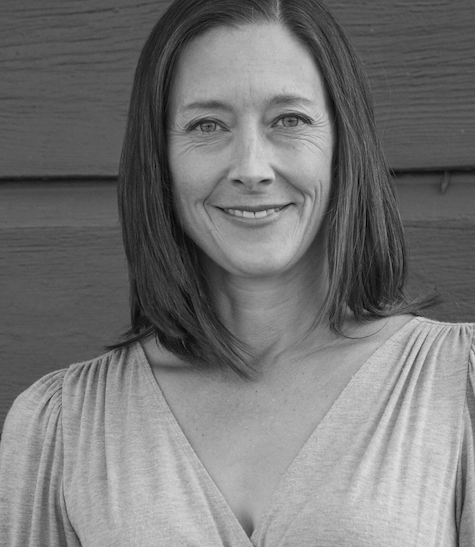
 After my daughter died, I often could not get up off of the floor. I stumbled through my days half in the grave, planning ways to get all the way there," says Amber Keyser, a biologist-turned-writer, who gravitates to stories about heroes, scientists, and adventurers.
Her recently published novel, The Way Back from Broken, is a tale of survival — physical, emotional, mental — that is earning critical praise.
At 3 Good Books (a blog series I host) Amber Keyser shares three good works that got her through.
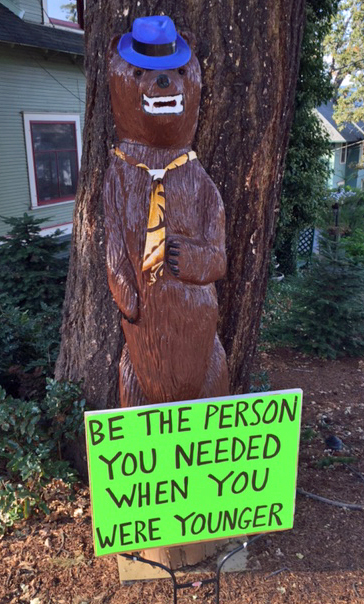
Because attention attracts gratitude and gratitude expands joy, it's time again for Thankful Thursday, a weekly pause to express appreciation for people, places, things and more.
I like a good sign. Skip the platitudes and syrupy affirmations. Stir my mind, slow my fret. I want to feel, to sigh with a hmmmm. It's so much to ask, I know.
On this Thankful Thursday, I appreciate this odd, silly, profound Bearer of Truth.
What are you thankful for today?
See more messages, signs & reminders:
 Allowing young people to tell
their stories and discover other
ways of seeing themselves and the
value of their lives is honoring them
and what they've survived.
 Catherine O'Neill ThornBecause a few questions can lead to endless insight, I'm happy to present Fast Five — interviews with my favorite writers and literary leaders.
Catherine O’Neill Thorn is a poet, writer and founder/director of Art from Ashes, a literary youth organization in Colorado. She has been conducting transformational poetry and spoken word workshops at juvenile detention facilities, treatment centers, and schools since 1992.
O'Neill Thorn developed the Phoenix Rising curriculum, designed to empower struggling youth to express their creativity through metaphor and expose them to a language based on self-affirmation and belief in a successful future. This method has since become the seminal program of Art from Ashes. In a series of three-minute writing prompts facilitated over two hours, young people see immediate evidence of their creative ability and readily share their experiences — a process that often takes much longer using standard inquiry or therapies.
Art from Ashes has provided workshops to over 8,000 young people who have survived traumatic events, are victims of abuse, neglect and/or poverty, and are at risk for or engaged in destructive behaviors.
How did you come to writing? Were you first a writer, then a leader?
I started writing poetry when I was five years old. In the British and Irish cultures, poetry is considered a high art form, and since all schoolchildren are taught the importance of elocution, memorization and literature, it stands that memorizing poetry is an necessary part of a young person’s eduction. Consequently, my mother started reading us poetry when we were toddlers; she often played Dylan Thomas on the record player and occasionally stopped mid-sentence and recited a lengthy poem from her childhood. At the time, my bothers and sister and I were not at all impressed, but now I have only her to thank for my deep appreciation of poetry.
As a teenager and young adult, I kept numerous journals filled with poetry . . . most of it incredibly sad. I wish I had this program then. It was a lonely business pouring out my heart in despair; I would have benefitted from the transformational process, as well.
I’ve always loved poetry. Some have said it’s my religion, but to me it’s actually a vehicle. When you’ve been driving a beat-up old Volkswagen and suddenly you have access to a new Mini Cooper, well . . . that’s poetry.
People often look at writing and poetry as a mushy and temporary feel-good fix, but you seem to see written expression as critical to survival. Is this true, and if so, why?
When I started developing the curriculum for youth in residential treatment, probationdepartments and eventually for Columbine High School students, I called into play my experiences as a writer; as someone who has struggled with anxiety and depression; and also my troubled past. When I added my spirituality and research into human behavior and psychology, that's when I realized that language is a powerful medium that taps into our subconscious and can direct and manage our perceptions. Since it it ultimately our beliefs, not our cognitive process, that most affects our choices and behaviors, the ability to dialogue with our subconscious and learn to manipulate our perceptions changes everything.
When we learn that there’s a difference between a fact and our story about the fact, as a creative genius, we see that we are totally in charge of our story. And it is our story that determines our reality.
The world can be ugly and cruel. And the world also is amazing and awesome. Both and everything in between is true. Allowing young people to tell their stories and discover other ways of seeing themselves and the value of their lives is honoring them and what they've survived. More than that, allowing someone who has suffered the opportunity to find strength and hope through the power of language is not only poetry but is neurology. My definition of poetry is a dialogue with the subconscious through the language of metaphor. The dialogue can be shifted, and the resultant shift can change everything.
Art from Ashes deliberately distinguishes its writing process from art therapy. What’s the distinction?
Poetry therapy is a distinct practice that requires training in specific therapeutic techniques, as well as how to integrate poetry with those techniques. Our process is a group process, and while it is an effective support to therapy, it is more focused on each individual’s creative genius and their ability to choose an identity that does not make them a victim of experiences or circumstances. We accomplish this not by therapeutic skills (although certainly the result is therapeutic) but by introducing young people to the power of the arts and their own creative genius; by allowing both a safe process using the language of metaphor and a space space in which to express their story without judgement; and by guiding young people who have struggled through a process of transformation—from despair to self-determination.
 The Phoenix Rising program reaches young people who have had limited or no exposure to the arts; because we bring in published poems, we provide arts education; because we introduce local poets and authors, we engage marginalized youth with the creative community; because we provide public performance opportunities, we allow young people to practice public speaking skills and reengage them with their community.
While all art is intrinsically healing, and while therapy has multiple cognitive and behavioral benefits, our curriculum is unique and effective because it’s interactive, self-directed, and taps into the creative subconscious utilizing our three-step process of expression, connection and transformation.
You’ve founded, organized and managed numerous literary events and community programs. You’re a motivational speaker, and a writer. What keeps you motivated to continue to give your time, energy and effort?
Someone once asked me about the spiritual beliefs that informed my work. After explaining the source of my process and that I believe this is the reason I was placed on the planet, he said, “I don’t mean to be disrespectful (you have to love sentences that start that way), but what if you’re wrong?”
Without giving it any thought, I responded, “I don’t care. It works.”
As long as the youth are responding, as long as their lives are improving, as long as they want to keep living, as long as they see themselves having a powerful future, I accept the multiple challenges (and even the ongoing fatigue!!!) and will go as long as I can.
What’s the best writing advice you’ve given or received?
Given: Don’t think. Your left brain is analytical and judgmental and has to be right and has to be good and you just need to make it SFU if you want to dialogue with your creative subconscious.
Received: Anne Lamott’s Bird by Bird. I gave it to all the Columbine students in my poetry group when they graduated. She has a whole chapter on Shitty First Drafts that corresponds with our process, but it was so refreshing to hear a widely-respected published author say it. I have to fight my own “rational” brain all the time to just let the words flow.
So yeah. Basically both say the same thing.
Bonus Question: I’m a word collector. What are you favorite words?
Oh so so many! The ones that are “chewy” in my mouth are my favorite, as well as onomatopoeia. I also like fairly obsolete words. We tend to cheer for those at the office. The Indian name Ramachandran is amazing to say. The Spanish word susurrada is one of my favs (whispered). I also like words like eschew (I have a bumper sticker that says “Eschew obfuscation”) and finagle and . . .